Live Joinery London

Service

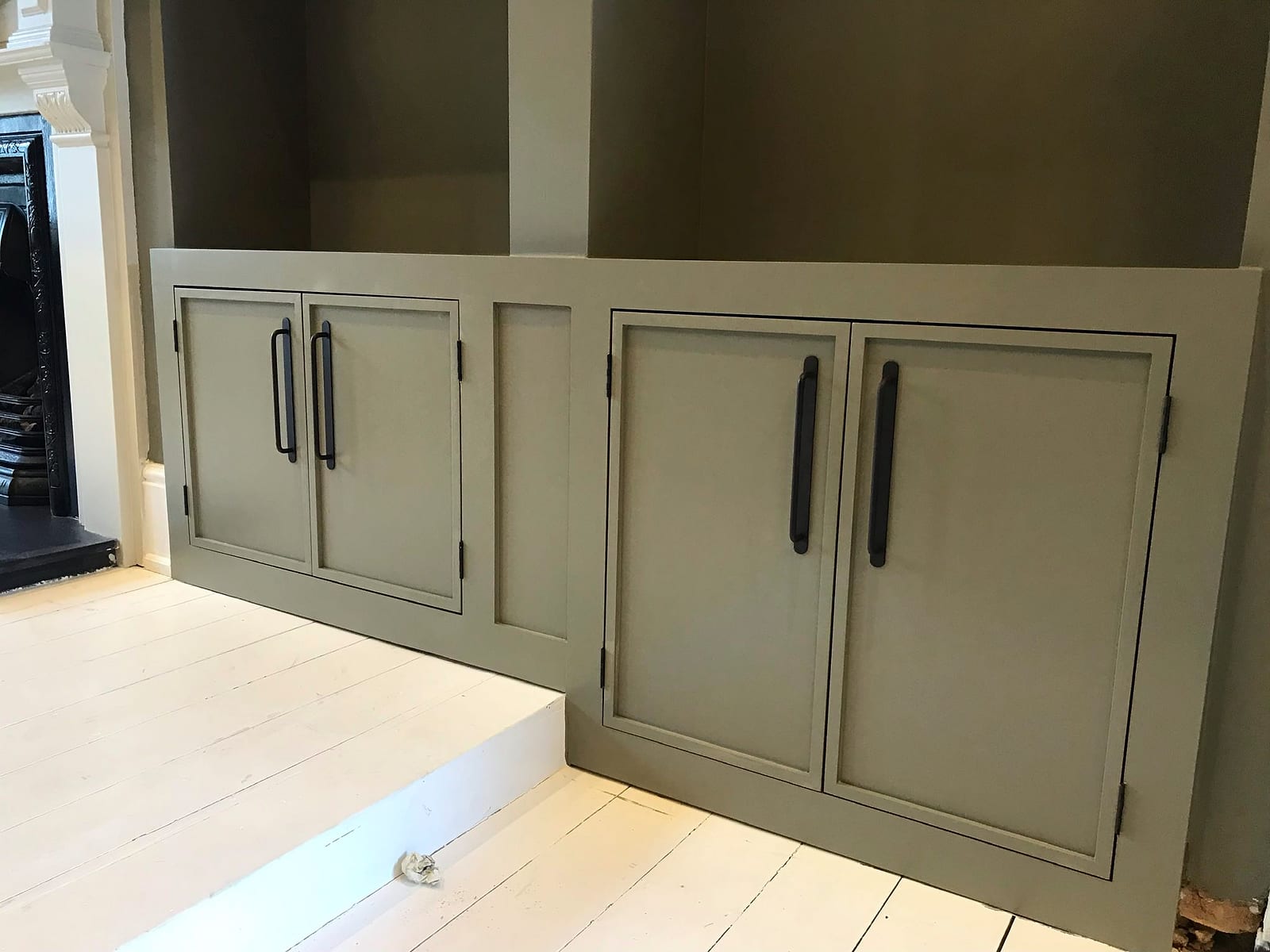
Built-in storage in East London

Under-stairs cupboards, eaves doors, hallway runs and other storage for the spaces flat-pack never quite fits.

Where built-in storage earns its money

Almost every London house has between 1 and 3 awkward spaces that can’t accept a freestanding piece of furniture but represent meaningful storage volume. The classic three: under the stairs, into the eaves of a loft conversion, and along the side of a hallway. Combined, these often add up to 2–4 cubic metres of usable storage — equivalent to a tall wardrobe and a chest of drawers — for £1,500–£3,500.

The economics of built-in storage are different from a fitted wardrobe. The cost-per-cubic-metre is lower because the visible surface area is smaller (shorter doors, less painted face per unit of volume), but the design and scribing time is roughly the same — every awkward space is awkward in its own particular way. For low-budget joinery briefs (“we just need somewhere for everything to live”) this is usually where we send people first.

The three patterns we build most often

Under-stairs runs in Victorian terraces. The under-stairs zone in a Victorian terrace is usually 1.2–1.8m long, 600–900mm deep, with a sloping ceiling that drops from full height down to about 300mm at the far end. The most-built pattern: a 600mm-wide vertical cupboard at the high end for coats; a horizontal pull-out shoe rack in the middle; small drawers at the low end for keys, mail, pet leads. Total cost: usually £1,500–£2,200.

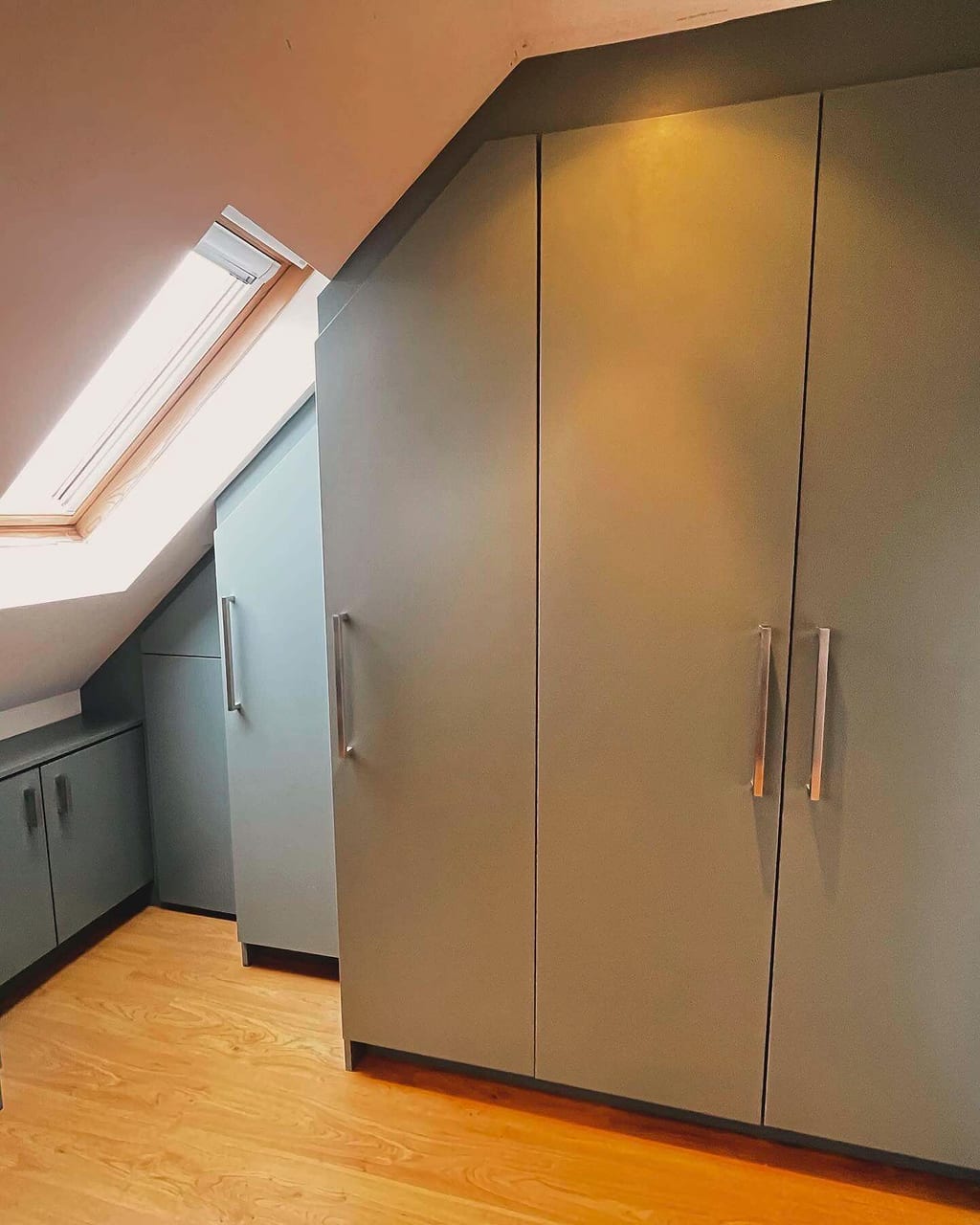
Eaves storage in loft conversions. The cavity behind a knee wall in a loft is typically 600–1000mm wide, 400–700mm deep, and as tall as the knee wall (usually 900–1100mm). We build a run of doors in the knee wall itself, with the interior space behind acting as long-term storage (suitcases, Christmas decorations, off-season clothing). Cost: £1,400–£2,400 for an average-sized loft.

Hallway shallow runs. A common late-renovation brief in narrow Edwardian terraces — clients have got the kitchen and reception done and the hallway is the bit that’s still missing. A run of 200–350mm-deep cupboards along the hallway wall, painted to match the walls, with push-to-open doors, gives meaningful storage without making the hallway feel narrower. Most are 2.2–3.2m long and run from skirting up to picture-rail height.

Where built-in storage isn’t the right answer

Not every awkward space wants joinery built into it. A few examples where we’ve recommended against a built-in:

  • The Victorian under-stairs cupboard that already exists. If your house has an original under-stairs cupboard with a hinged door, the cheapest improvement is usually new interior shelving, a coat rail, and good lighting — keeping the original door. Replacing the cupboard with a new bespoke run loses character for marginal gain.
  • Very small awkward voids (less than 0.3m³). Below that volume the joinery cost is hard to justify; a basket or a cabinet on castors usually works better.
  • Spaces near damp. Built-ins against an external wall in an older property with no DPC will trap moisture against the wall and accelerate damp problems. Better to address the damp first or leave the space ventilated.

These are conversations we’ll have at the survey. The right answer is sometimes “don’t build anything here.”
Costs

Typical scopes and budgets

These are service ranges, not photographed jobs. The final quote depends on room size, finish, hardware, access and interior detail.

Scope Typical range What moves the price
Single under-stairs cupboard (door + interior shelving) £900–£1,600 Door style, ceiling height under stairs, interior fit-out (shelves vs drawers vs hanging)
Multi-compartment under-stairs (drawers + cupboard + shoe rack) £1,500–£2,400 Number of pull-out units, finish, mouldings to match existing skirting/architrave
Eaves storage in loft conversion (built into knee wall) £1,400–£2,400 Run length, slope angle, door style, ventilation requirements
Run of hallway / corridor storage (cupboards + shelves at 250–350mm depth) £1,800–£3,500 Run length, ceiling height, whether shoes / coats / general are mixed

Options

Common materials and choices

Carcass

18mm MDF (painted) or Egger MFC

Painted MDF is standard for visible faces; MFC where everything will be behind doors.

Doors

MDF shaker or flat slab, hand-painted

Often painted in the same colour as adjacent walls so the storage reads as architectural rather than as freestanding furniture.

Hardware

Push-to-open catches or recessed finger pulls

Storage cupboards often look best with no visible handles — keeps the wall reading as a wall. Soft-close on every door as standard.

Questions

Frequently asked

What's the best use of under-stairs space in a London terrace?
Depends on what's nearby. If the front door opens into the under-stairs zone (very common in Victorian terraces), it's the highest-traffic storage zone in the house and earns its keep as coats / shoes / bags / Amazon parcels. If the under-stairs is in the kitchen or rear reception, it works better as appliance storage (vacuum, ironing board), wine, or pantry overflow. The shoe-rack pattern is the most common; we've built it 50+ times.
Can we put a desk in the under-stairs space?
Sometimes — depends on headroom and lighting. The under-stairs space has variable ceiling height; you need at least 1.4m at the lower end to sit at a desk comfortably. Lighting matters too — most under-stairs cavities don't have a window, so a desk there needs good task lighting from above. About one in five clients ends up doing this rather than the shoe/coat brief.
How do you handle the back of stair treads in an open-tread staircase?
If the stairs are open at the back (visible from underneath), under-stairs storage usually means finishing the under-side of the stairs as part of the cabinet's ceiling. We can either leave the treads exposed and run a panel underneath them, or close them in completely. The closed-in option costs more (more panels, more scribing) but gives a tidier visual result. Walk us through the geometry at the survey.
Does eaves storage in a loft conversion need ventilation?
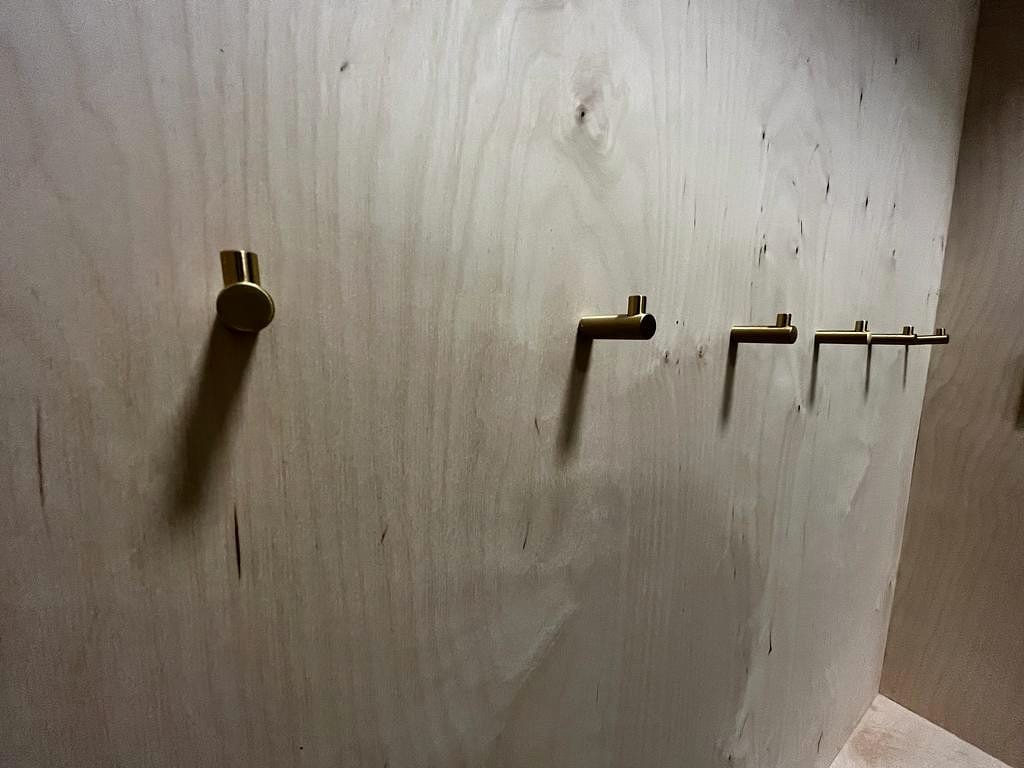
Sometimes — the cavity behind a knee wall in a loft is usually unventilated and can collect condensation in winter. We add a couple of discreet vents (round brushed-brass grilles, 50mm diameter) in the storage doors where the loft regs require it. Worth checking with your loft conversion's building-control sign-off paperwork; if the space behind was certified as a cold roof, ventilation is required.
Call WhatsApp Book survey