Live Joinery London

Service

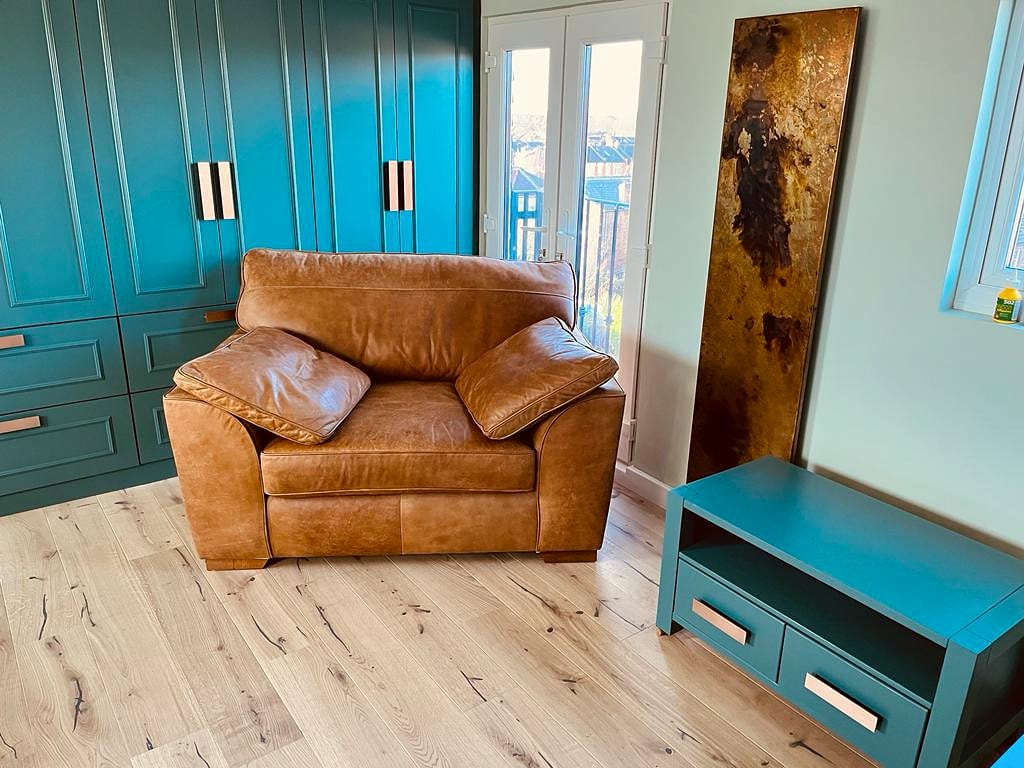
Fitted wardrobes in East London

Made-to-measure fitted wardrobes for London homes — sliding or hinged, shaker or flat-fronted, with interiors planned around what you actually own.

Why bespoke beats off-the-shelf in real London bedrooms

Almost every bedroom we work in has at least one of three problems that make off-the-shelf wardrobes a compromise: a ceiling above 2.4 metres (the IKEA Pax limit), an alcove created by a chimney breast, or a wall that isn’t square. A bespoke wardrobe handles all three without complaint — it’s measured to the actual room and built to fit it.

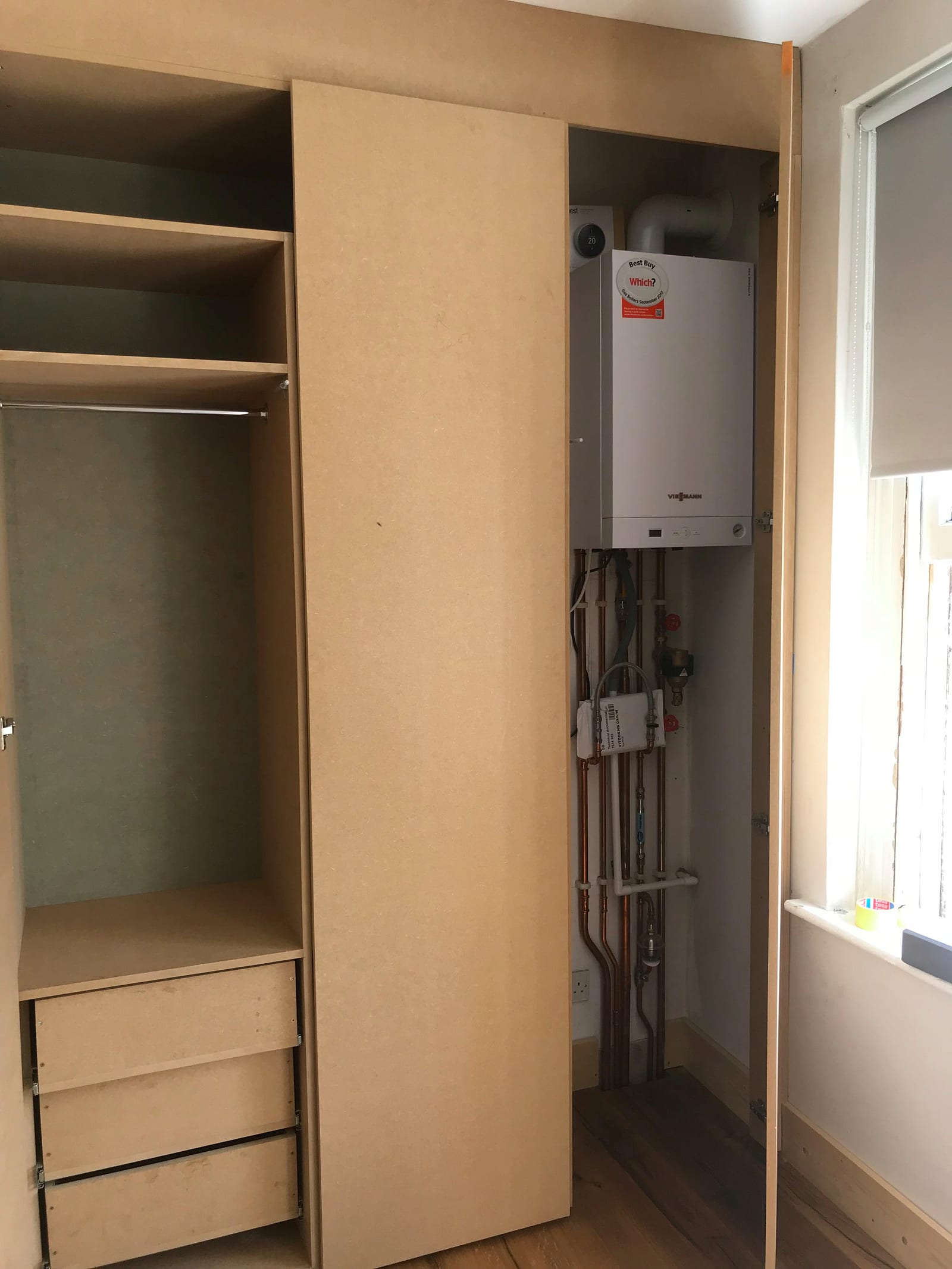
The other reason clients pick bespoke is the interior. Most flat-pack wardrobes are designed for a generic “shirts and shoes” customer — half hanging, half shelves, one shallow drawer. The wardrobes we build are designed around what you actually own. If you’ve got 20 pairs of trousers we’ll build a pull-out trouser rail; if you’ve got two it doesn’t earn its space. If you wear suits we’ll size the hanging zone for a full-length jacket; if you don’t, we use that height for drawers instead. The cost of bespoke goes mostly into design and material — the interior fit-out usually adds 10–20% over the carcass-only base price and is the part most worth spending on.

Door styles we offer

We build five main door styles. Shaker — a five-piece frame and panel — is by far the most common; it suits both period homes and modern ones, and it photographs well in pretty much any colour. Flat-slab is the minimalist alternative, typically in painted MDF or wood veneer. In-frame shaker is the higher-end variant where the door sits inside a face frame with a small shadow gap around it — more material, more workshop time, but a noticeably more handmade look. Tongue-and-groove is the rare-but-charming option for coastal and cottage interiors. Mirrored panels are for wardrobes that need to be a full-length mirror too — typically in smaller bedrooms where wall space for a standalone mirror isn’t an option.

Typical scope and budget

A pair of shaker wardrobes flanking a Victorian chimney breast — one of the most common East London briefs — usually comes in at £2,400–£4,200, takes three weeks in the workshop and two to three days on-site, and uses about 6m² of door surface and 1.4m³ of cabinet volume per wardrobe. The exact figure depends on height, door style, paint finish, drawers, lighting and how much scribing the room needs.

When fitted is not the right answer

If your room is rectangular with a flat ceiling under 2.4m and skirting that runs straight, an IKEA Pax with a panel scribed down one side and a top filler above will be 30–50% cheaper than bespoke. We’ve recommended that route more than once when it was the better answer. The line where bespoke starts to earn its premium is roughly: irregular ceiling, irregular wall, full-height usage, or a door style not in the Pax range. Below that line, off-the-shelf wins on value.

If you’re not sure which side of that line your room falls on, the free site survey will tell you. We’ll be honest about it.
Costs

Typical scopes and budgets

These are service ranges, not photographed jobs. The final quote depends on room size, finish, hardware, access and interior detail.

Scope Typical range What moves the price
Single-bay shaker wardrobe (1.2–1.5m wide) £1,800–£2,900 Ceiling height, painted vs veneer finish, hinged vs framed-shaker doors
Pair of wardrobes flanking a chimney breast (2× 0.9–1.2m) £2,400–£4,200 Door style, whether interiors match the room (drawers + rails vs shelves only)
Full-wall hinged wardrobe (2.4–3.6m) £3,200–£5,400 Number of doors, interior fit-out (drawers, trouser rails, jewellery inserts)
Sliding-door wardrobe (2.4–3.6m, two or three doors) £3,600–£6,000 Door panel material (mirror, lacquered glass, veneer), track system, soft-close
Walk-in dressing-room conversion (2.4–4m run) £4,500–£6,500 Number of stations, interior lighting, finish on the back of doors and side panels

Options

Common materials and choices

Carcass

Egger Eurodekor MFC 18mm

Same material the high-street fitted-furniture brands use, in U999 (matt black), W1000 (premium white), or any of 200+ stocked decors. Edge-banded on all visible faces.

Shaker doors

MDF five-piece, hand-painted

22mm MDF rails and stiles around a centre panel, sprayed in Tikkurila Helmi or Farrow & Ball Modern Eggshell. Any colour you bring us is matched.

Sliding-door systems

Häfele or Komandor track

Top-hung where ceiling height allows (cleaner look, easier to clean under), bottom-running where it doesn't. Soft-close included; mirror panels available.

Hardware

Blum CLIP top BLUMOTION hinges, TANDEM drawers

Soft-close on every door and drawer as standard. Handles range from invisible push-to-open to brass / nickel / matt-black pulls.

Process

How this service works

  1. Site survey

    30 minutes on-site. We measure the room, photograph the space, talk through what you actually store and the lifestyle around it.

  2. Fixed quote

    Itemised written quote within seven days. Each bay broken out separately so you can dial scope up or down before signing.

  3. Design sign-off

    Layout drawing and interior elevation. For sliding-door or in-frame work we add a 3D render so door proportions can be approved before we cut.

  4. Workshop build

    Three-to-five-week lead time. Carcasses and doors built and pre-finished in our East London workshop before they leave for site.

  5. Install

    Two-to-four days on-site for a single wardrobe. Floors protected, dust contained, room left clean each evening.

Questions

Frequently asked

Should I choose sliding or hinged doors?
Hinged doors give you full access to the interior and are 20–30% cheaper. They need room to swing — typically 700mm of clear floor space in front. Sliding doors don't need that swing room, so they're the right answer when the wardrobe sits opposite a bed or wall less than a metre away. Sliders also tend to be the right call for floor-to-ceiling mirrored panels.
Can a fitted wardrobe go floor-to-ceiling?
Yes — that's one of the main reasons clients pick fitted over Pax. We routinely build wardrobes to ceilings of 2.4–3.2 metres, sometimes higher in period homes. The top section above the hanging zone is usually used as long-term storage (suitcases, boxed shoes) accessed by a small library ladder for the highest shelves.
How do you handle sloping ceilings or eaves?
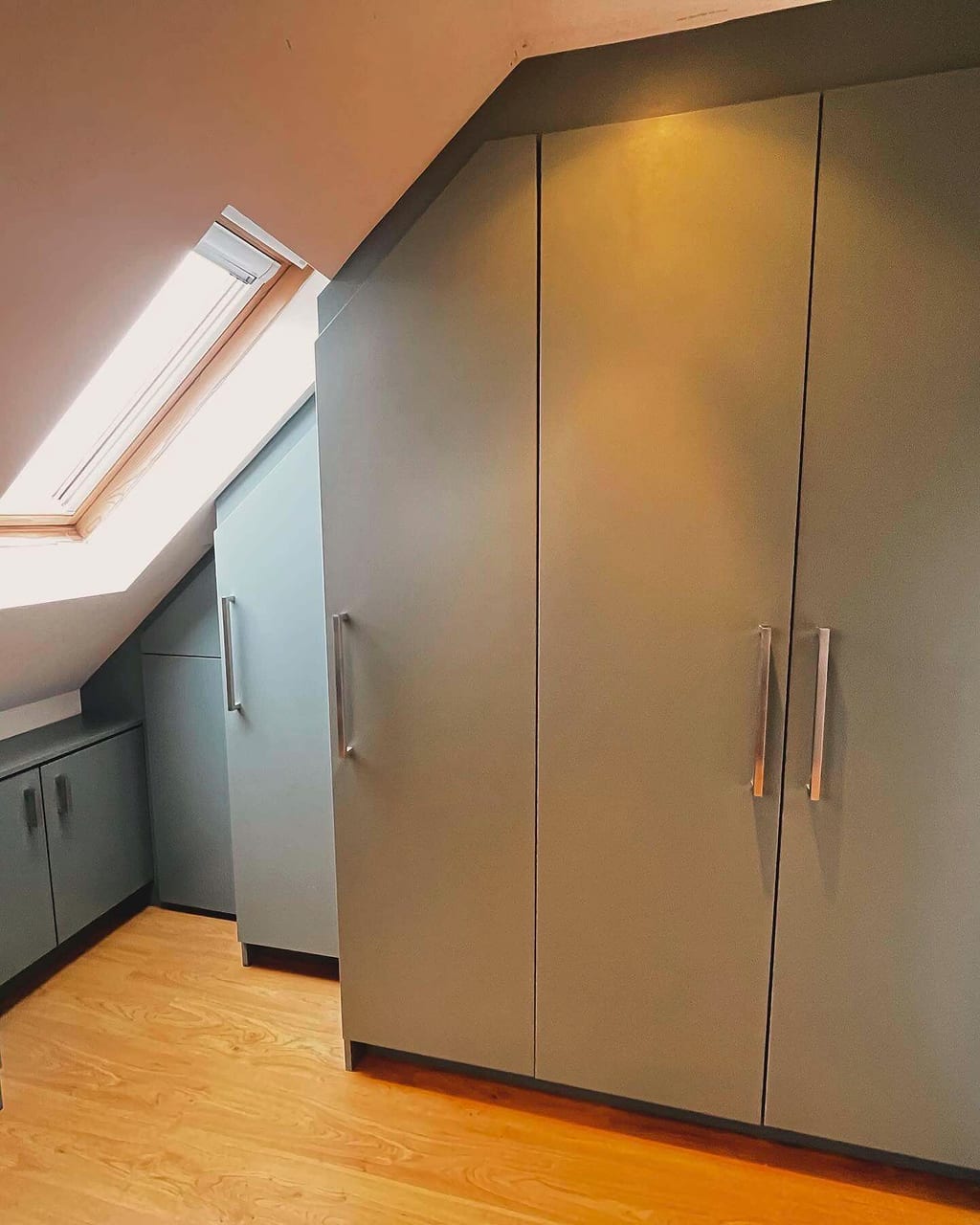
Most wardrobe work in Victorian terraces and loft conversions involves a sloping ceiling on at least one side. We scribe each panel individually to the actual slope of the room (not a drawing of it), and we usually use the lower-height end for drawers and the taller end for hanging rails.
Can you match an existing wardrobe or built-in?
Yes, in most cases. If you've got an existing piece of joinery in the room (a built-in cupboard from a previous renovation, or one we don't want to remove for cost reasons) we can match the new work to its door style, paint colour and proportions. Bring photos to the survey, ideally with a tape measure visible for scale.
What's the lead time for a fitted wardrobe?
Three-to-five weeks from order acceptance to the first day of install. We confirm the install window when you sign the quote and stick to it — if we've committed to a date we don't push it because of a different client. Express turnaround (two weeks) is occasionally possible at a 15% premium and depending on workshop loading.
Do you remove the old wardrobe or built-in?
For old fitted furniture we can usually remove and dispose of it as part of the install — flat fee added to the quote depending on volume. For freestanding wardrobes (Pax or otherwise) most clients sell or gift them on Marketplace before our install date; we can also dismantle and take them away if that's easier.
Call WhatsApp Book survey